

For years, Atlanta has been the cultural and commercial heartbeat of the Southeast. But as the city grows denser and more fast-paced, many Atlantans are quietly looking north — toward Chattanooga, a mountain-ringed river city with a lifestyle that feels both grounded and elevated.
Once considered a weekend escape, Chattanooga is now a full-time destination for families, remote workers, and investors who crave more space, more nature, and more balance. The shift isn’t subtle: 2026 is poised to be one of the strongest relocation years on record between the two cities.
This guide takes a look at how Atlanta and Chattanooga compare — from cost of living and taxes to schools, commutes, and the intangible sense of place that shapes everyday life.
The Financial Picture: Cost of Living in 2026
Housing has always been the dividing line between Atlanta and Chattanooga — and in 2026, the gap is wider than ever.
Atlanta’s housing market remains one of the fastest-moving in the region, especially inside the I-285 loop and throughout North Fulton. Median home prices hover around $455,000, with new construction regularly topping $620,000 to $2M+.
Chattanooga, while growing, still offers a distinctly different value proposition. Here, the median home price is closer to $345,000, and new construction communities routinely deliver mountain views, estate lots, and privacy for 30–40% less than comparable Atlanta neighborhoods.
For many Atlanta families, the question becomes simple: “Why pay more for less?”
Chattanooga’s slower pace doesn’t just feel different — it costs different. Groceries, utilities, transportation, and insurance all trend 5–15% lower than Atlanta across the board. And unlike Atlanta, where growth often comes with price pressure, Chattanooga’s cost of living remains more stable.
Taxes: A Tale of Two States
One of the strongest drivers of Atlanta-to-Chattanooga migration is Tennessee’s famously friendly tax climate.
State Income Tax
-
Tennessee: 0%
-
Georgia: 5.39% (2026)
It’s a difference felt immediately, especially by high-earning professionals and remote workers keeping Atlanta-based salaries while enjoying Tennessee-based tax freedom.
Tennessee’s property taxes remain among the lowest in the Southeast, while Georgia’s continue ticking upward — especially in the suburban counties favored by families (Fulton, Cobb, Gwinnett). Many relocating homeowners find that their annual property tax bill drops by 30–50% after moving to Chattanooga.
Taken together, the financial picture tilts unmistakably north.
Lifestyle: Two Cities, Two Rhythms
While Atlanta thrives on energy and momentum, Chattanooga radiates something else: intentionality.
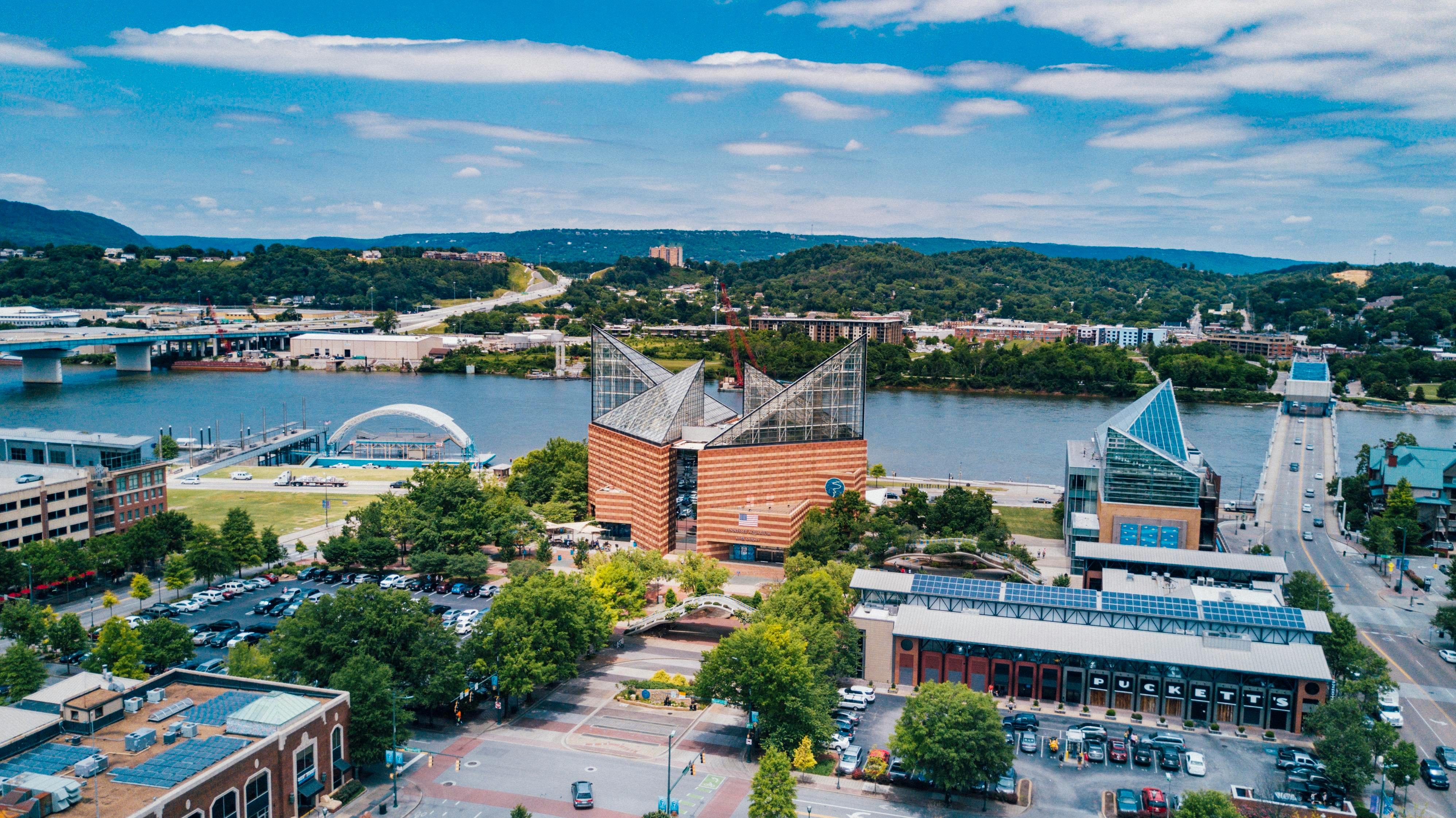
Its lifestyle is defined by proximity to nature, a revitalized riverfront, a thriving food scene, and a pace that feels more lived-in than hurried.
Commutes & Transportation
Atlanta’s commute is the stuff of regional legend — 38 to 48 minutes on average, often more. Congestion is a daily presence, shaping everything from school schedules to weekend plans.
Before the days of fiber opticts, Chattanooga was traditionally nicknamed America’s Scenic City. Chattanooga’s average commute is about 20 minutes, and the simplicity is something newcomers appreciate within the first week. Here, you can leave work and be on a mountaintop trail or the lake before the sun sets.
Chattanooga has the kind of in-between space that defines quality of life and was recently named America’s first National Park City in April of 2025.
The Outdoors: Where Chattanooga Truly Shines
If Atlanta is the Southeast’s economic powerhouse, Chattanooga is its outdoor capital — a place where weekend adventure begins at the city limits and world-class recreation is woven into daily life.
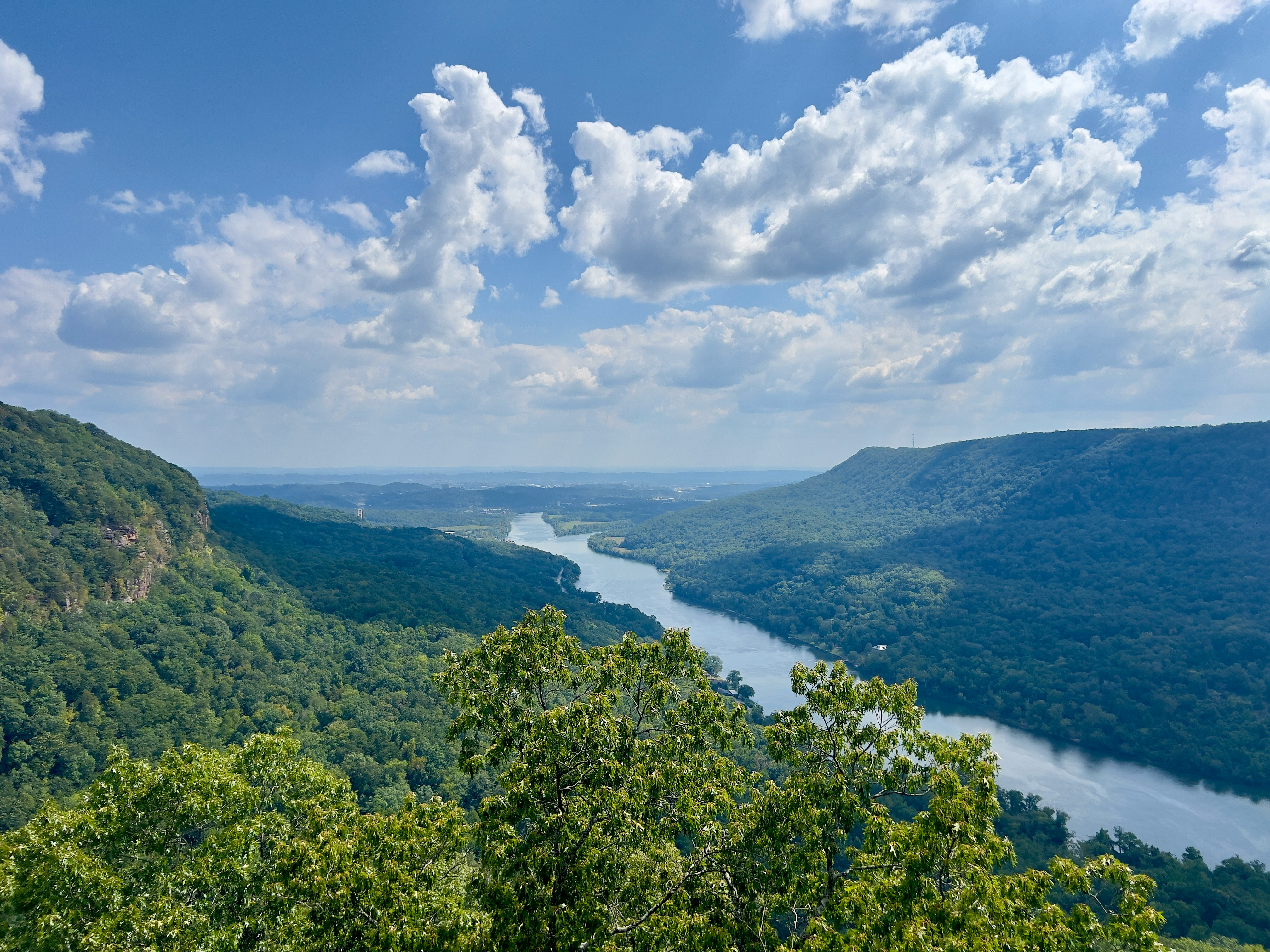
Ringed by mountains, framed by the Tennessee River, and dotted with state parks and protected natural areas, Chattanooga offers the kind of outdoor access that few cities in the region can match. It’s not something you plan for here — it’s something you live in.
Iconic Outdoor Experiences in and Around Chattanooga
• Lookout Mountain: Hiking, brow views, hang gliding, and historic overlooks — from Point Park to Sunset Rock. One of the most photographed elevated ridges in the Southeast.
• Signal Mountain & Signal Point: Home to sweeping river gorge views, trailheads, and quiet, wooded neighborhoods with instant access to the Cumberland Trail.
• Tennessee Riverwalk (16.1 miles): A beautifully maintained riverfront trail connecting downtown Chattanooga, the Bluff View Arts District, and South Broad — ideal for running, biking, and sunset walks.
• Coolidge Park & Walnut Street Bridge: A pedestrian-only bridge stretching over the Tennessee River, connecting to Northshore’s parks, green spaces, boutiques, and riverfront lawns.
• Chickamauga Lake & Nickajack Lake: Two expansive waterways perfect for boating, paddleboarding, fishing, and waterfront living. Easily one of Chattanooga’s biggest lifestyle perks.
• Prentice Cooper State Forest: A massive protected wilderness above the Tennessee River Gorge — offering dozens of trails and some of the best overlooks in the region.
• Stringer’s Ridge: Mountain biking and trail running minutes from downtown — a rare asset for a growing metro.
• Lula Lake Land Trust: A pristine conservation area with waterfalls, bluffs, and guided hike days, just 20 minutes from downtown.
• Raccoon Mountain: One of the premier mountain biking trail systems in the Southeast — hundreds of riders travel here each year.
• Rock City & Ruby Falls: Iconic, family-friendly attractions that offer dramatic geological features, guided tours, and breathtaking brow views.
• The Tennessee River Gorge (“The Grand Canyon of Tennessee”): A 27-mile, protected river canyon viewed from multiple overlooks on Lookout and Signal — unmatched in the Southeast.
Schools and Community Feel
Chattanooga’s suburban communities — from Signal Mountain and East Brainerd to Ooltewah and Apison — offer strong schools, quieter streets, and the familiar warmth of a mid-sized Southern city. The lifestyle skew is “family-centered,” with easier mornings, lighter traffic, and a community vibe closer to a large town than a sprawling metro.
Atlanta, of course, offers exceptional options too — but often with higher price points, longer commutes, and less access to open spaces.
Many families relocating north emphasize the same theme: “We feel like we got our time back.”
More Land. More Views. More Possibility.
Atlanta’s land inventory has tightened significantly, especially in areas like Alpharetta, Milton, Roswell, and East Cobb. Prices continue climbing, and privacy is increasingly hard to find.
Chattanooga’s surrounding counties — particularly Hamilton, Bradley, Rhea, Meigs, and Sequatchie — offer:
-
Mountain-view estate lots
-
Creek and bluff properties
-
Acreage suitable for homesteads
-
New luxury communities
-
Waterfront options on Chickamauga and Nickajack
And they come at 40–60% lower cost than their Atlanta counterparts. Through 423 Land’s development network, relocating buyers gain access to:
-
Custom builds
-
Modern mountain homes
-
Craftsman and contemporary designs
-
Estate-lot neighborhoods
-
Thoughtfully planned communities
-
Homes oriented for views, privacy, and lifestyle
The build process is often smoother, quicker, and more cost-effective than in Atlanta’s busiest suburban corridors.
If you’re asking if moving from Atlanta to Chattanooga is the right move for your family, the answer is a confident yes if your priorities include:
-
Lower cost of living
-
No state income tax
-
Improved commute times
-
Access to nature
-
Larger homes and lots
-
Strong investment potential
-
A more balanced pace of life
…then Chattanooga offers a remarkably compelling alternative.
It’s not a step backward — it’s a step toward a lifestyle with more room to breathe. We love Chattanooga and are pretty confident you will too.
👉 Get a curated list of available mountain-view and lake-access properties
👉 Schedule a consultation to begin your search

)